Valerie Martin on Chekhov’s “The Duel”
Valerie Martin is in New York tonight to read from her latest short story collection, The Unfinished Novel and Other Stories. As a prelude to her visit, she was happy to talk about one of her favorite short stories by one of the masters of the form.
Anton Chekhov’s story “The Duel” concerns a number of characters, all residents of a hot seaside town in the Caucuses, who pass their time in light “official” duties and in conversation with and about one another. Ivan Andreich Laevsky, a young man who works for the finance ministry, lives unhappily with his mistress, Nadezhda Fyodorovna, a married woman who has run away with him, forsaking her husband and causing a rift between Laevsky and his mother who “couldn’t forgive me this liaison.” The couple is hard up for money and their passion for each other has turned to dust in the hot sun.
Laevsky is a typical Chekhov character, filled with self-loathing and angst, constantly imagining that he will be happy if he can only make some change in his circumstances. In Petersburg he thought he would be fulfilled by running away to the Caucuses with Nadezhda where they would settle, make new friends and buy a piece of land, “labor in the sweat of our brow, start a vineyard, fields, and so on.” Now, faced with the tedium of small town life and a horror of the fields full of “venomous centipedes, scorpions and snakes under every bush and stone,” all he wants is to leave his mistress and return to St. Petersburg. “If I were offered two things, to be a chimney sweep in Petersburg or a prince here, I’d take the post of chimney sweep.” He confides this to his friend, Dr. Samoilenko, a soft-hearted, peaceable man, “infinitely kind, good-natured, and responsible,” who advises Laevsky to take pity on his beautiful, intelligent mistress and offer her respect and indulgence. “Marry her, dear heart!” he concludes. But Laevsky cannot endure the notion that he has any duty to Nadezhda, and goes away with one thought in mind—to escape—though he isn’t sure how to do it. “In my indecision I am reminiscent of Hamlet,” Laevsky thinks as he goes out for a game of vint. “How rightly Shakespeare observed it! Ah, how rightly!”
16 May 2006 | selling shorts |
Cristina Henriquez Reaches for “The Sun, The Moon, The Stars”
Cristina Henriquez is the author of Come Together, Fall Apart, a collection of eight short stories and an eponymous novella. West Coast readers will get a chance to see her in Seattle tonight (at Elliott Bay) and Los Angeles tomorrow (at Dutton’s), and in a joint appearance with Daniel Alarcon at Corte Madera’s Book Passage later this week.
If the task of choosing my favorite short story were akin to choosing some sort of international literary prize, my shortlist would look something like this: “The School” by Donald Barthelme, “Pastoralia” by George Saunders, “Marie” by Edward P. Jones, “Good Country People” by Flannery O’Connor, “Goodbye, My Brother” by John Cheever, and “The Sun, the Moon, the Stars” by Junot Diaz. Then again, if I were on the panel for a prize whose shortlist looked like this, there would probably be murmurs among the other jurors suggesting that I be disqualified as a judge, my bias obvious.
I would try to convince them that I really did love all these stories equally, that they had each influenced me or knocked my socks off at some time. But, like a parent who claims to love all his children the same but whose adoration for one is plain, there’s no denying it: Junot Diaz’ “The Sun, the Moon, the Stars” is my favorite short story. To read my writing, it’s not a surprising choice. Which is why I was loath to pick it when I first started writing this. I wanted to be less predictable. But oh, admit it, I finally thought, “The Sun, the Moon, the Stars” is The One for me.
1 May 2006 | selling shorts |
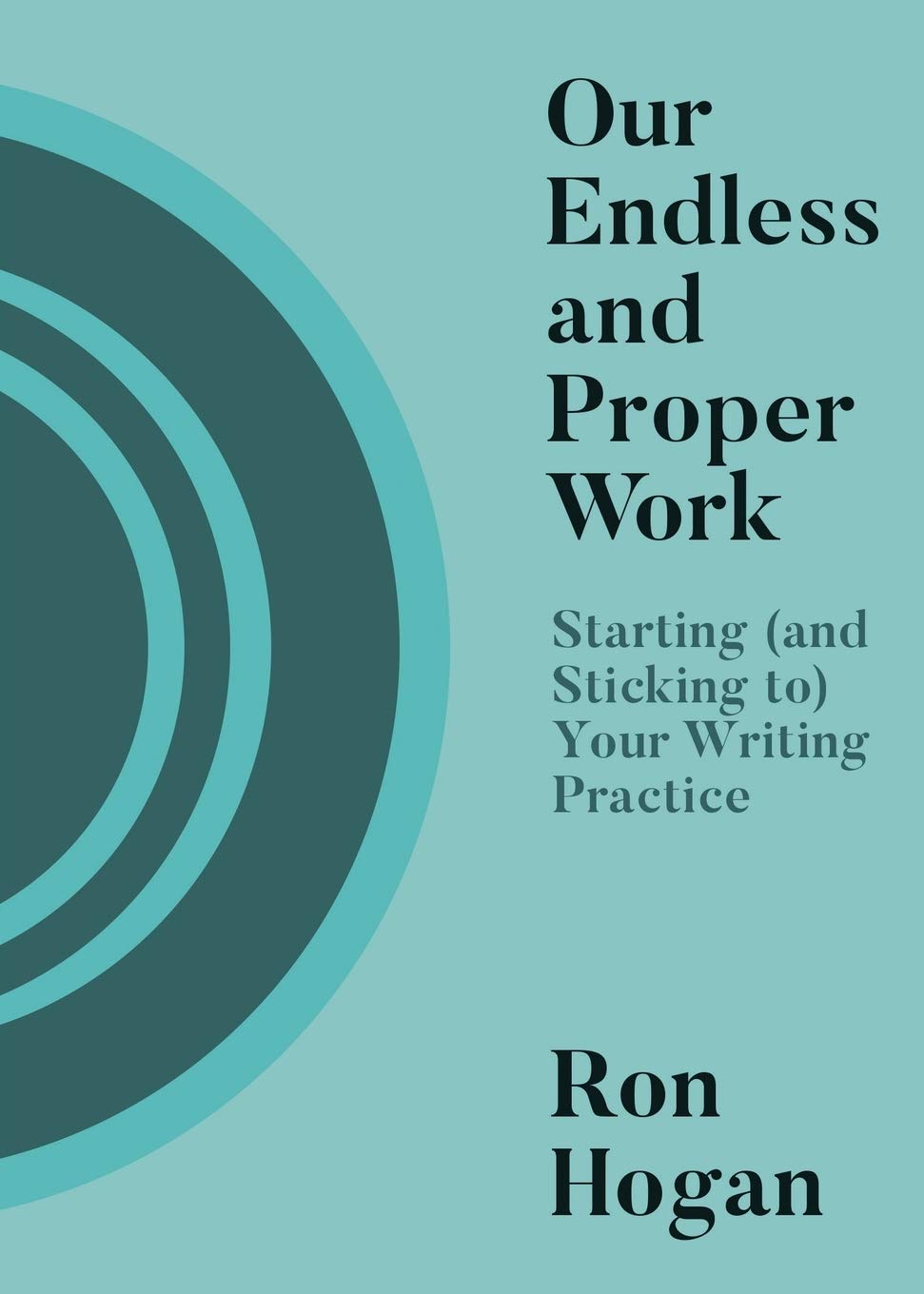 Our Endless and Proper Work is my new book with Belt Publishing about starting (and sticking to) a productive writing practice.