
A Few of Jean Thompson’s Favorite Things
Jean Thompson’s last short story collection, Who Do You Love, was nominated for the National Book Award, so readers are understandably excited at the news of a new collection with a dozen of her latest stories, the trade paperback original Throw Like a Girl. I asked Thompson to talk about her own favorite short story, but she didn’t want to pin it down to just one!
There are some story writers to whom I’ve granted Hall of Fame status, that is, their place in my list of favorites is so automatic and assured, I exempt them from any further competition. So Chekhov, Flannery O’Connor, and Raymond Carver aren’t listed below. But you should go read them. All of them.
Here’s a handful of stories that I love, in no particular order. Perhaps unsurprisingly, many of them address the art of writing itself.
1. Alice Munro, “Meneseteung”: This is another author who might well be placed in my Hall of Fame, but I can’t resist including this great story, which explores the act of imagining, as well as the dark side of writing. When Munro’s 19th-century poetess seeks to contain all of creation in a single poem, the result is madness. And although we are reminded at every turn that this is a story, an invention, the effect is heartbreaking.
2. Peter Taylor, “The Old Forest”: Taylor’s detailed evocation of 1937 Memphis might seem quaint to us, until we realize that our own time and place can be analyzed in just such a way, with an eye towards its mores and its written and unwritten codes. Somehow, a single moment in this long, carefully wrought story manages to put all of civilization at risk. Either life will continue as it always has for the narrator and his world, or else the looming chaos (and freedom) of the old forest will prevail.
5 July 2007 | selling shorts |
Alix Ohlin Amplifies The Roaring Girl
When I invited Alix Ohlin to talk about one of her favorite short story writers as her own first collection, Babylon and Other Stories, is just coming out in paperback, she sent me an essay that gets at the heart of Beatrice’s “Selling Shorts” series, introducing readers to an author they probably haven’t encountered before—and in this case, it sounds like it might take a little work to track her literary hero down. But it also sounds like it’ll be worth the effort; I know I’m checking the shelves the next time I visit the Strand…
Though otherwise a defiantly rational person, I maintain a hokey, quasi-mystical belief that the books you’re meant to read pop magically into your life at the time you need them most. I know it sounds crazy. But how else to explain the way I once, as a bored teenager, pulled Alice Munro’s Lives of Girls and Women off a neighbor’s shelf during a tedious grownup dinner party, or the copy of Joseph Mitchell’s Up in the Old Hotel I found at a stoop sale the year I moved to New York, or—most magically of all—the appearance in my life of Greg Hollingshead’s 1995 story collection The Roaring Girl, which I literally picked up at random, in uncorrected proof form, from a $1.00 sale bin in Austin, Texas, in 1999?
It was my first year of graduate school in gruelingly hot (though otherwise lovely) Austin, and my confused body kept waiting for the respite of winter, thinking it had to come eventually. (It never did.) Having spent the past few years moving around the U.S., I had somehow missed Hollingshead’s book, which was a big hit in my native Canada and won the country’s most prestigious literary prize, the Governor General’s Award.
In the sweltering bookstore, I picked up The Roaring Girl, read the first page of the first story, “The Side of the Elements,” and laughed out loud. I felt like I was home—maybe I mean Canada, or maybe I mean some other country, a country of sensibility rather than geography. In this story, a couple goes away for a year and must sublet their house to strangers. (“Hopeless people. If your dog went with them for a walk he would get run over.”) The year passes; things go wrong—hilariously, sorrowfully wrong. That’s about it. What’s remarkable is not the events that ensue or the suburban setting for them, but the way Hollingshead writes about the ordinary in an extravagant, lyrical register that’s neither baroque nor self-mocking. The story begins in the realm of the ordinary (questions of property, ownership, damage deposits) and moves effortlessly to the existential (the seduction of suicide, violence, chaos). The narrator, that stoic homeowner, finds himself driving drunk and courting danger, looking for “disappointment, so useful to sustain proper amazement that order should ever prevail.”

My other favorite is the title story, “The Roaring Girl,” which shares its name with a Jacobean play about a pickpocket (her nickname in turn comes from the roaring boys, rowdy, disruptive young men who disturbed the quiet folk). The pickpocket in this story is a runaway girl who lives briefly with a young boy, Jim, and his difficult, downtrodden parents during the 1950s. The girl appears in the family’s life, abuses their hospitality, and leaves again; the plot is as basic as that. But Hollingshead makes of it, using simple, sturdy language, something strong and poetic and true. Years later, the story tells us, Jim will think of the girl and marvel at this most stunning fact: that he was once a thought in her mind. When he thinks about it, the story concludes, in its powerful, matter-of-fact way, “his heart will just roar.”
The Roaring Girl helped me find my way as a writer—it moved me towards writing about my own background, and about the ordinary, in a way that I could make my own—but more importantly, it made me feel less alone, which, if I can be hokey again, is one of the most magical things books can do.
Looking up the book on Amazon for this essay, I see that it’s out of print in the U.S., which is a shame. So you might have to search for it in some bargain bin or out of the way shelf (for example, Ron adds, Powells.com has a few copies). If you do find it, and if the universe decrees it to be the right book for you at the right time—read it and trust me. Your heart will just roar.
3 July 2007 | selling shorts |
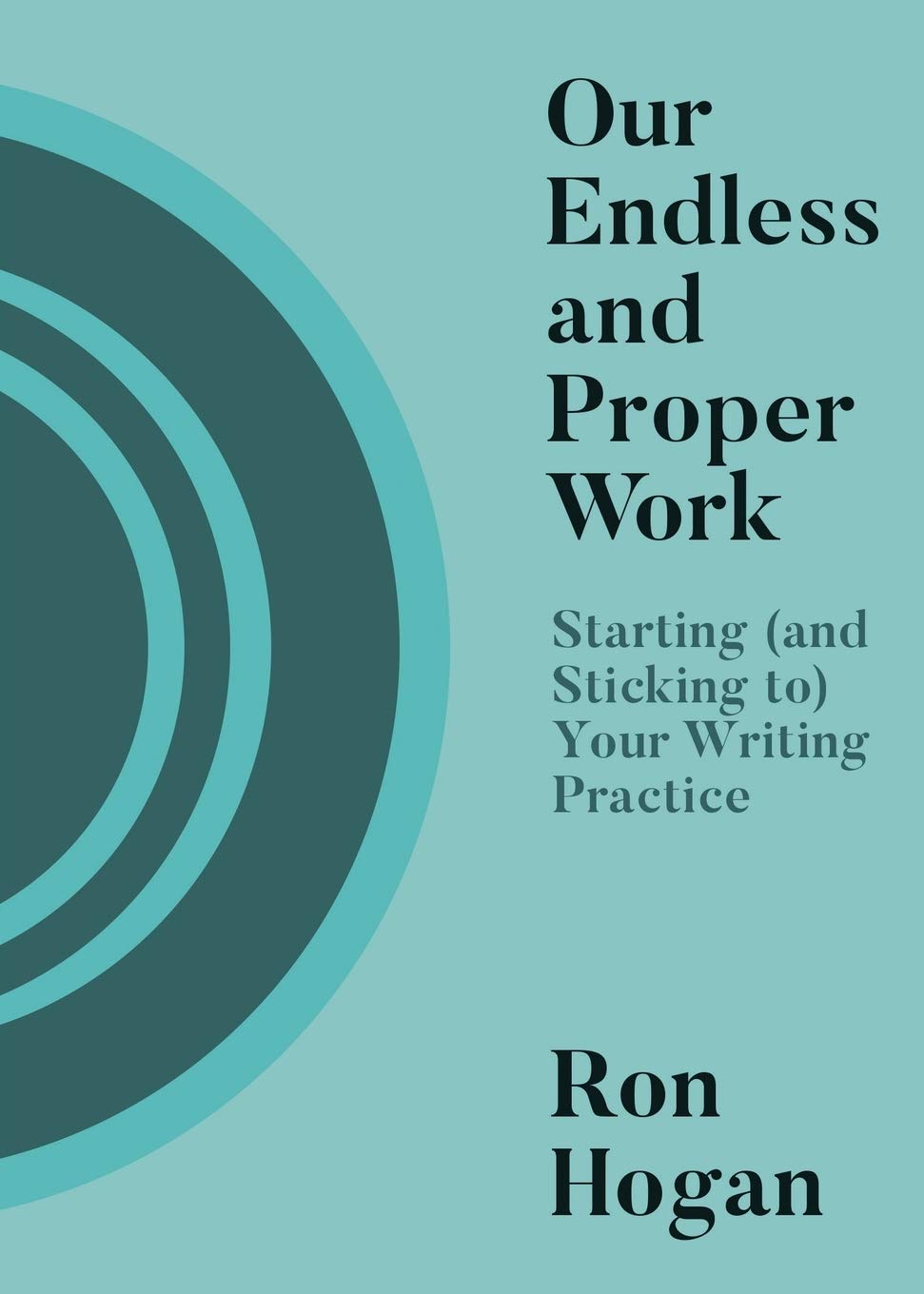 Our Endless and Proper Work is my new book with Belt Publishing about starting (and sticking to) a productive writing practice.