After Katrina: 2 New Orleans Authors Look Back
In what turned out to be the longest “Author2Author” feature I’ve run on Beatrice so far, TJ Fisher and Joshua Clark talk about their experiences remaining in the French Quarter after New Orleans was devastated by Hurricane Katrina. Here’s how Clark describes it:
I often ask people to picture the lights going off in the room you’re sitting in. The computer, the air conditioning, phones, everything. Then the people, every last person in your building, on the street outside, the entire neighborhood, vanished. With them go all noises—chit-chat, coughs, cars, and that wordless, almost impalpable hum of a city. And animals. No dogs, no birds, not even a cricket’s legs rubbing together, not even a smell. Now bump it up to 95 degrees. Turn your radio on and listen to 80% of your city drowning. You’re almost there. Only 28 days to go.
As I say, this is probably the biggest thing I’ve ever run on this site—most likely the biggest thing I ever will—and this is an issue that deserves it. Two years later, there is still much work to be done and questions left to answer.
24 August 2007 | author2author |
Author2Author: TJ Fisher & Joshua Clark
A few months ago, I got hold of the galleys for Heart Like Water, a memoir by French Quarter Fiction publisher Joshua Clark of his experiences in the city during and after Katrina. I was immediately riveted by the raw emotional honesty and by Clark’s rich sense of the absurd. Then, a few weeks later, Morgana Press sent me a copy of Orléans Embrace, a gorgeous coffee table book which combines a 1993 study of the Vieux Carré by Roy F. Guste, Jr., with reflections by TJ Fisher on the effort to preserve the city’s unique legacy in the storm’s aftermath. When I brought Fisher and Clark together by email, I had no idea it was going to turn into the biggest Author2Author feature yet, but these two survivors clearly had a lot to talk about.
 TJ Fisher: Louisiana, New Orleans, and the French Quarter in particular has always been an intriguingly ripe Mecca, a convergence point for writers and artistically creative persons of all types. Whether born here or transplanted, New Orleanians somehow instinctually understand that the age-old agonies and ecstasies of griefs and galas go hand-in-hand.
Once you’ve lived this lifestyle, and partaken of this odd collective consciousness, could you ever leave, really? Could you give up the confections, concoctions, incarnations, and incantations of New Orleans? Few can, as Lafcadio Hearn once said, without regret. No, once you have drank from the fountain that is the Vieux Carré, it is impossible to willingly give up the strange connection of camaraderie that infiltrates the French Quarter. Clearly, you stayed, I stayed, others who left with no choice now look for a way to get back, and other seek to move here still—as there is no place like New Orleans, and there never will be.
I guess my real question is this: High disaster broke me through a 7-year writing block. I would certainly not recommend being stripped to the marrow of your bones, or grappling with runaway misery, anger and sadness, as a cure for anyone, but a torrent of emotions and words flowed out of me like floodwaters. I hardly left my French Quarter room for a year, working on Orléans Embrace. I just had to write, and write, and write. I could not stop; what was unleashed could not be turned back, would not be silenced. I found my voice. Yet it was the most difficult piece I have ever written. I know you are a talented writer, and you’ve brilliantly shaped and edited several incredible books before Heart Like Water, but I am wondering if the horrors and nightmares (and, yet, enlightenments) of Katrina, the passions and truths you have seen laid bare, the things you now know, also compelled you to unlock yourself as a writer?
Joshua Clark: Forcing myself to write this book, there certainly was a purging of emotions—has anyone ever had to write a memoir about a national tragedy this soon?—and it’s forced me to deal with many things that many New Orleanians have avoided and hence continue (and will probably always continue) to suffer from. On the flip side, I still haven’t had the chance to totally absorb some of the horrors, because when I was living here immediately after the storm, I was simply too busy trying to get food and water and keep smiles on peoples’ faces, and then, later, because I’d been so busy working on the book. The things I saw, I should have cried many times—but rarely have. But I think our works differ greatly: Heart Like Water is part adventure story, part love story, part documentary. I have tried to show what it is about New Orleans that we love, and loves us. You tell us what it is, and you tell it well. I’d sooner jump out my window than have to translate the city’s spirit and architecture directly into words. So I admire you for that.
(more…)
24 August 2007 | author2author |
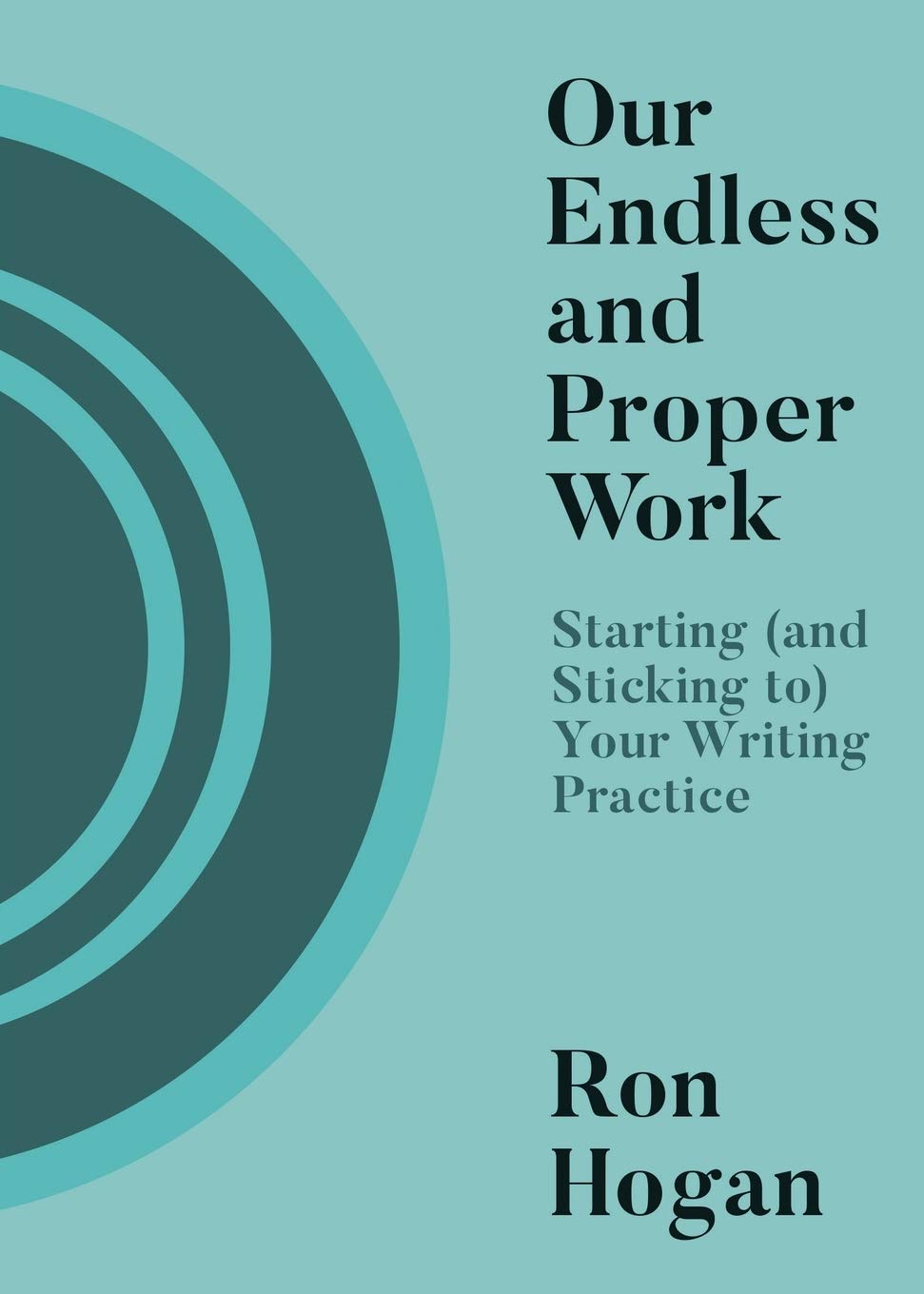 Our Endless and Proper Work is my new book with Belt Publishing about starting (and sticking to) a productive writing practice.