Author2Author: Edwin Thomas & C.C. Humphreys
When St. Martin’s sent me two historical adventure novels, Treason’s River by Edwin Thomas and Jack Absolute by C.C. Humphreys, I thought teaming the two authors up for a chat was a natural. Turns out they were way ahead of me: Thomas and Humphreys have been friendly for years. That set a great tone for their conversation here.
 Edwin Thomas: Most historical authors (certainly including me) start with a historical period or person, and then fictionalise it. You’ve gone the opposite way and ‘historicalised’ a fictional character (Jack Absolute was originally a character in Sheridan’s The Rivals). Does that alter the process of writing the books?
C.C. Humphreys: Writing Jack is a bit different, I suppose, than writing my other novels where it all comes purely from my head. I did have something to go on with Jack Absolute, both Sheridan’s play and, especially, my performance in the role twenty years ago. So part of the fun of writing him—and he is huge fun to write!—is taking some of the situations that Sheridan’s Jack, my acting Jack and indeed, Sheridan himself would have encountered and inventing whole new stories around them. To take a couple of examples: the love of theatre and of theatricality; the duelling (Sheridan fought a famous one, I’ve fought dozens). His family: one of my favourite characters, who appears in the second and third novels is Jack’s father, Sir James (the play’s Sir Anthony) Absolute, and my ‘Mad Jamie’ is every bit as bellicose as the play’s Sir… only more so!
So fun, yes, to use some of the play’s ideas as springboards—but they are only that. The joy is to take them to realms as yet uncharted—and then the novel writing process returns to normal: invent something, then the next something, then join them together!
When you first conceived your novels, did you have a character in mind and then seek a period to place him in? Or were you determined to write about the Napoleonic naval era and found a character to fit?
Edwin Thomas: I’d been wanting (and trying) to write about Nelson’s navy for a number of years. In fact, most of my early attempts focussed on a character not a million miles away from Jack Absolute: a doughty, dashing, unstoppable hero who thrived on adventure, Errol Flynn and James Bond and Horatio Hornblower all rolled into one. He was meant to be extreme, to affectionately send up the heroic conventions of the genre, but he only really worked in an extreme (and extremely unrealistic) context. As I decided I wanted to be more historically faithful in the stories I told, I found he didn’t really fit my needs any more. So I jettisoned him, and went to the other extreme of the heroic spectrum: Martin Jerrold.
26 February 2007 | author2author |
Kyra Davis: “Thank You, Maureen Dowd!”
Kyra Davis was one of the many authors with something to say about Maureen Dowd’s anti-chick lit column over the weekend (I collated a lot of responses at my other blog, GalleyCat). Davis, who has appeared as a guest author here before, is the author of several novels for Harlequin’s Red Dress Ink and Mira imprints, including last fall’s So Much for My Happy Ending.
When I read Maureen Dowd’s column, my initial reaction was one of gratitude and relief. It’s nice to know that, while chick lit books aren’t selling as well as they used to, the genre is still successful enough to tick off the literary elitists: If imitation is the sincerest form of flattery, animosity is a close second.
Once the giddiness elicited by Dowd’s harsh critique subsided, I started thinking about the issues raised in her piece. For instance, Dowd was indignant to find that her local bookstore had the audacity to put Sophie Kinsella’s books next to Rudyard Kipling’s. I can see her point. How dare they shelve their books in alphabetical order? Everybody knows that they should be organized in order of greatness. They should start with Lynn Schnurnberger’s The Botox Diaries and work their way up to Dante’s Inferno.
And of course she’s right to be horrified by the pink cover put on Romeo And Juliet. It would be awful if someone who wouldn’t normally read Shakespeare became compelled to pick up one of his greatest plays because of its new girly cover. Shakespeare’s plays should all be bound in black so that those who buy them can flaunt their somber attitude about literature, even if what they’re reading is a play about a guy with a donkey head being romanced by the queen of the fairies.
11 February 2007 | guest authors |
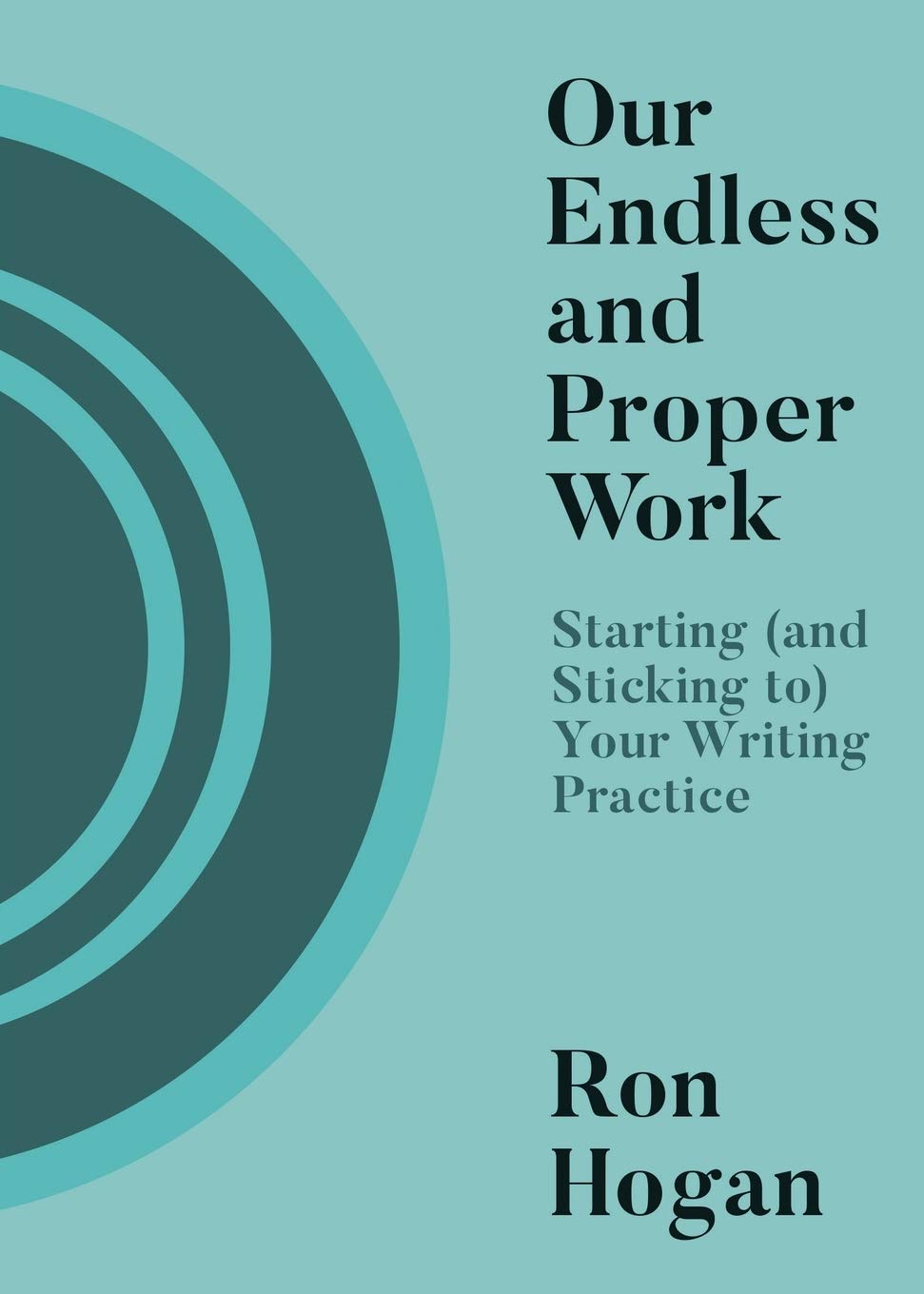 Our Endless and Proper Work is my new book with Belt Publishing about starting (and sticking to) a productive writing practice.